
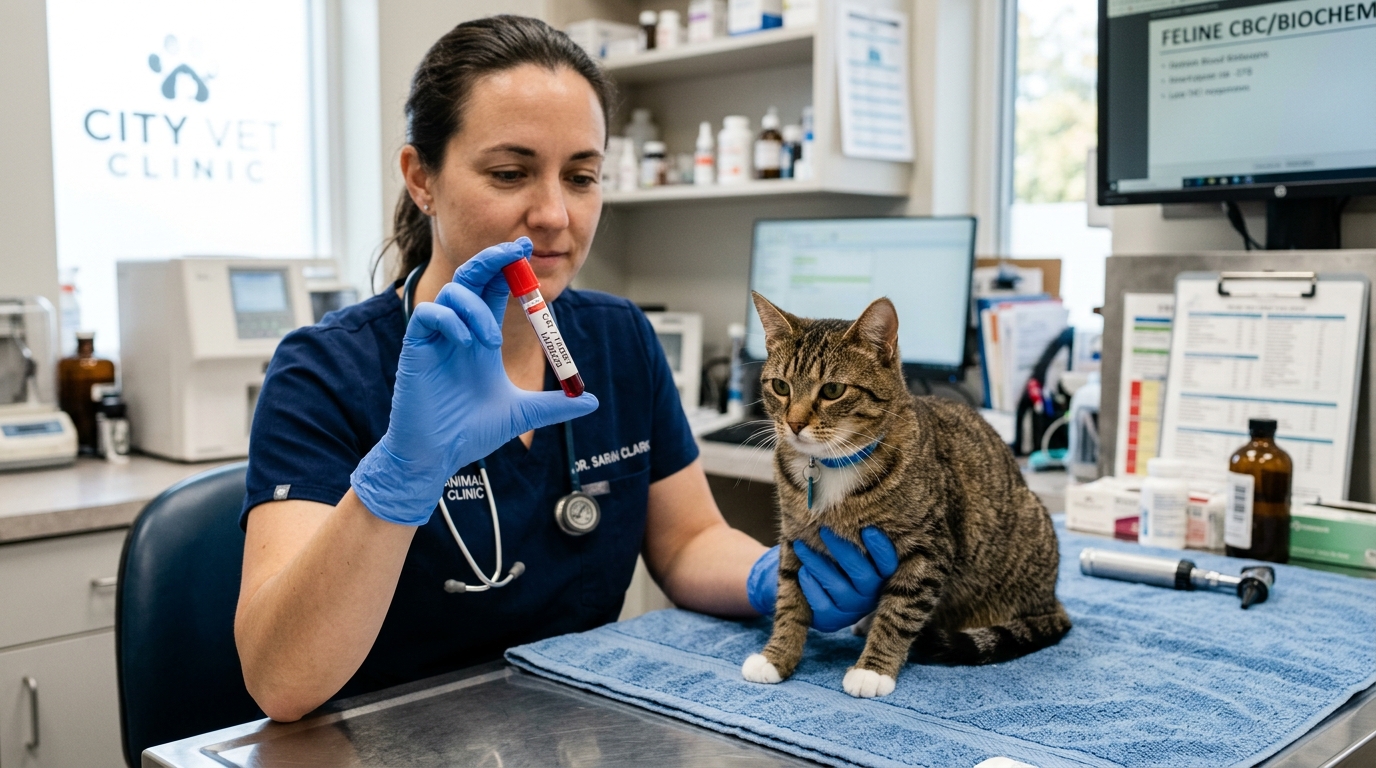
Decoding the CBC and Serum Chemistry Profile
Blood tests are among the most informative diagnostic tools available to modern veterinary medicine. Because feline patients cannot verbalize their symptoms, blood work acts as a direct biochemical window into the body's metabolic balance, immune defense, and organ health.
A comprehensive feline blood panel consists of two fundamental components: the Complete Blood Count (CBC), which examines the cellular elements, and the Serum Biochemistry Profile, which analyzes circulating electrolytes, enzymes, and proteins.
The Complete Blood Count (CBC) Essentials
- RBC (Red Blood Cells) & HCT (Hematocrit): Measures the circulating volume of oxygen-carrying erythrocytes. Low readings denote anemia, whereas elevated values suggest acute dehydration or erythrocytosis.
- WBC (White Blood Cells): Represents the primary cellular immunity defenders. Marked elevations indicate bacterial infection or inflammation, while low counts can point to viral suppression like FeLV/FIV or panleukopenia.
- Platelets (PLT): Essential for coagulation. Cats frequently exhibit harmless clumping in lab machines, requiring microscopic blood smear verification.
Key Biochemistry Markers and Their Implications
Renal Biomarkers (Kidneys)
BUN (Blood Urea Nitrogen): Byproduct of protein breakdown filtered by the kidneys.
Creatinine: Specific metric of glomerular filtration rate (GFR). Early rises warrant IRIS staging.
SDMA: Detects kidney decline as early as 25% to 40% loss of function, far ahead of creatinine.
Hepatic Biomarkers (Liver)
ALT (Alanine Aminotransferase): Direct leakage enzyme from hepatocytes experiencing cellular stress or inflammation.
Total Bilirubin: Yellow breakdown pigment. Elevations signify hemolysis, liver disease, or biliary obstruction.
ALP: Bile duct and bone enzyme. Even mild elevations in cats are clinically notable due to its short half-life.

Community Discussion 0
Leave a Comment
Have questions about symptoms, tests, or your cat's health? Share your comment below.